
The Complete Guide to Hashish: Centuries of Tradition, Modern Innovation, and Everything In Between | Canna Center Dispensary
For countless generations spanning multiple centuries, hashish has remained an integral cornerstone of global cannabis culture, weaving itself into the fabric of societies across continents and civilizations. Throughout the vast expanse of our world, each distinct geographical region has meticulously cultivated and refined its own unique methodologies for collecting, processing, and perfecting cannabis resin, ultimately giving rise to the remarkably diverse and expansive spectrum of hash varieties that we encounter in today’s modern cannabis marketplace. From the ancient, time-honored traditions of hand-rubbing techniques practiced by skilled artisans in remote mountain villages to the cutting-edge, technologically advanced extraction laboratories equipped with state-of-the-art equipment, the evolution of hashish production represents a fascinating journey through human ingenuity and botanical mastery.
At Canna Center Dispensary, we recognize that every single variety of hash possesses its own distinctive visual appearance, unique tactile texture, complex aromatic profile, and varying levels of potency that set it apart from all others. Our commitment to education and quality means we’re dedicated to helping you understand the nuanced differences between these remarkable cannabis concentrates. Let’s embark on a comprehensive exploration of the most iconic, celebrated, and sought-after varieties of hashish available today, examining in detail what makes each one genuinely special, memorable, and worthy of appreciation.
Understanding Hash: Cannabis Resin in Its Most Concentrated and Potent Form
At its fundamental core, hash, also widely known as hashish throughout various cultures and regions, represents pure, unadulterated cannabis resin that has been carefully concentrated and densely packed with an abundance of powerful cannabinoids including THC (tetrahydrocannabinol), CBD (cannabidiol), CBN (cannabinol), HHC (hexahydrocannabinol), along with an impressive array of aromatic terpenes such as myrcene, linalool, caryophyllene, and pinene, among numerous others. These naturally occurring compounds work synergistically to create what cannabis researchers refer to as the “entourage effect.”
Because these valuable compounds exist in such highly concentrated forms within hashish, this cannabis product consistently delivers a substantially stronger, more immediate, and faster-acting experience compared to consuming regular cannabis flower in its natural state. This concentrated potency makes hash an absolute favorite among cannabis enthusiasts, medical patients, and connoisseurs who are actively seeking a more intense, profound, and therapeutically effective experience. At Canna Center Dispensary, we carefully curate our hash selection to ensure that whether you’re a newcomer exploring cannabis concentrates for the first time or a seasoned veteran with years of experience, you’ll discover exactly what you’re searching for within our premium collection.
Hash Classified by Geographic Region: Where Ancient Tradition Meets Refined Technique
Historically and traditionally, hashish has been classified, categorized, and distinguished primarily by its country or region of origin, where both indigenous local cannabis strains and culturally specific extraction methodologies combine to give each variety its unmistakably unique character, personality, and distinctive qualities. The terroir of cannabis, much like fine wine, plays an enormous role in determining the final product’s characteristics.
Moroccan Hashish: The Mediterranean Gold Standard
The North African nation of Morocco holds an absolutely legendary, almost mythical status within the international hash world, particularly throughout Europe, where its convenient geographical proximity historically made Moroccan hash one of the most widely consumed, traded, and celebrated types of hashish for decades. Thanks to centuries upon centuries of unbroken tradition, meticulous craftsmanship, and dedication to quality, Moroccan hash has earned its well-deserved reputation for exceptional quality and distinctively memorable flavors that cannabis enthusiasts recognize immediately.
The classic, time-tested method employed throughout Morocco’s hash-producing regions is known as dry sieving: carefully dried cannabis flowers are methodically laid out over extremely fine mesh screens, then gently and rhythmically struck with wooden sticks or similar implements, effectively knocking loose the precious, resinous trichomes that contain the plant’s most valuable compounds. This extraordinarily fine powder, commonly referred to as kief or pollen, is subsequently heated and compressed under pressure into solid slabs or spherical balls of hash. Throughout international cannabis markets, this particular style is frequently called Dry Hash, and it remains one of the most recognizable forms of cannabis concentrate worldwide.
Depending on the specific cannabis plant genetics utilized, the precision of filtering techniques employed, and the particular pressing methods applied, several distinctly different types of Moroccan hash emerge, each with its own devoted following:
Blond Hash: The Gentle Introduction
Also affectionately called pollen by many consumers and producers (though technically speaking, that term more accurately refers to the unpressed kief before compression), this light-colored, mustard-yellow to golden hash originates from cannabis strains with comparatively lower THC concentration levels and undergoes minimal filtering processes. Blond hash has earned widespread recognition and appreciation for its remarkably smooth, pleasant flavor profile and relatively mild, manageable effects, making it absolutely perfect for beginners who are just starting their journey into the world of cannabis concentrates, as well as for daytime use when functionality and clear-headedness remain important priorities.
At Canna Center Dispensary, our selection of premium Blond Hash represents some of the finest examples of this classic Moroccan style, carefully sourced and rigorously tested to ensure consistent quality and purity.
Red Hash: The Rif Mountain Treasure
Considerably richer in THC content and overall potency, Red Hash is frequently crafted from cannabis plants cultivated in Morocco’s famous Rif mountain region, an area internationally renowned and celebrated for its exceptionally potent local landrace strains that have been refined through generations of selective cultivation. The result of this careful production process? A noticeably darker appearance with distinctive reddish hues ranging from deep amber to burgundy, accompanied by a stronger, more robust, and significantly more intense psychoactive experience that experienced cannabis consumers particularly appreciate.
The Rif region’s unique combination of climate, altitude, soil composition, and traditional growing practices creates cannabis plants with exceptional resin production, and Canna Center Dispensary is proud to offer authentic Red Hash that honors this centuries-old tradition.
Black Hash (Hardala): The Ketama Classic
Distinctively sticky, remarkably moldable, and characterized by its deep, rich black coloration, Black Hash, also known by its traditional name Hardala, is typically sourced from specific regions like Ketama, another legendary hash-producing area within Morocco’s mountainous interior. While exact recipes, specific strains, and precise production techniques may vary somewhat between different producers and villages, this particular type of hash is universally prized and highly valued for its intense, powerful effects and luxuriously rich, pliable texture that makes it easy to work with and incorporate into various consumption methods.
Afghan Hashish: The Hindu Kush Legacy
When discussing cannabis history, cultivation, and traditional hash production, Afghanistan occupies truly sacred ground within the cannabis community’s collective consciousness. Many respected botanists, historians, and cannabis researchers firmly believe that Indica cannabis strains first evolved and developed their characteristic traits in Afghanistan’s rugged, unforgiving Hindu Kush mountain range, and accompanying this botanical heritage comes an extraordinarily long-standing, deeply rooted tradition of hashish craftsmanship that has been passed down through countless generations of skilled artisans.
The Afghan Production Process: Patience and Precision
Afghan hash production shares certain fundamental basics and core principles with Moroccan methodologies, but incorporates several additional, crucial steps specifically designed to enhance purity, refine texture, and maximize potency. After the cannabis flowers have been properly dried under carefully controlled conditions, the production process unfolds as follows:
First, the precious resin is meticulously and carefully sifted through multiple layers of progressively finer mesh screens, with each successive screening removing additional plant material and isolating increasingly pure trichome heads. This multi-stage sieving process, while time-consuming and labor-intensive, ensures that only the highest quality resin makes it into the final product.
Next, the collected kief undergoes slow, gentle pressing combined with the application of warm water or traditional tea over heated metal plates, a technique that requires considerable skill, experience, and patience to execute properly. The heat and moisture work together to bind the resin particles while preserving the delicate terpene profiles that give Afghan hash its characteristic aroma.
Finally, the pressed hash is carefully cured and dried inside specially prepared animal skins, typically goat or sheep, a traditional preservation and aging process that can extend for weeks or even multiple months, depending on the desired final characteristics. This curing period allows the hash to develop deeper, more complex flavors while achieving the perfect consistency.
The Remarkable Result: Afghan Black Gold
The culmination of this painstaking process yields a dense, dough-like block characterized by a deep, lustrous black color and a smooth, almost caramel-like consistency that experienced hash consumers immediately recognize. This careful, methodical process, combined with the use of exceptionally potent, resin-rich cannabis plants indigenous to the region, creates an extremely strong, powerful product that delivers strong, fast-acting, and long-lasting effects that have made Afghan hash legendary among connoisseurs worldwide.
Canna Center Dispensary takes immense pride in offering authentic Afghan-style hash that honors these traditional production methods while meeting modern safety and quality standards.
Pakistani Hashish: The Border Cousin with Its Own Identity
Just across Afghanistan’s eastern border, Pakistan shares much of its neighbor’s hash-making DNA, cultural traditions, and production expertise, yet has developed its own distinctive variations and regional characteristics that set Pakistani hash apart as a unique product worthy of individual recognition and appreciation.
The Pakistani Method: Familiar Yet Distinct
The production process employed throughout Pakistan’s hash-producing regions closely mirrors traditional Afghan techniques in many respects: multiple careful sievings to remove plant material, patient pressing with the addition of liquids to bind the resin, and extended curing periods in animal hides to develop flavor and texture. However, subtle differences in local cannabis genetics, regional climate variations, and specific family techniques passed down through generations create a final product with its own unmistakable personality.
The Pakistani Product: Dark, Sticky, and Powerful
Pakistani hashish typically exhibits several characteristic features that distinguish it from its Afghan counterpart:
Color and Texture: Deep, rich black coloration that appears almost jet-black in certain lighting, with a noticeably stickier, more adhesive consistency compared to Afghan hash, making it somewhat more challenging to handle but also indicating high resin content and freshness.
Flavor Profile: Distinctively spicy, deeply earthy, and sometimes notably harsh on the throat and lungs, with complex flavor notes that some consumers describe as peppery, woody, or reminiscent of exotic spices. This intensity of flavor reflects the robust terpene profiles present in Pakistani cannabis varieties.
Effects and Experience: A powerful, deeply sedative, and profoundly relaxing high that comes on heavy, settles into the body quickly, and persists for extended periods, making Pakistani hash particularly popular for evening use, pain management, and promoting restful sleep.
Expert Insight from Canna Center Dispensary
If you’re actively searching for a classic nighttime hash that will help you unwind after a long day, ease chronic pain, or simply ensure a good night’s sleep, Pakistani varieties are frequently and accurately described by experienced consumers as “couch-lock in a block”, a playful but truthful characterization of their profoundly relaxing, sedative properties. At Canna Center Dispensary, we help our customers understand these effects so they can make informed choices about which hash variety best suits their needs and preferences.
Nepalese Hashish: The Himalayan Hand-Rubbed Tradition
High up in the majestic Himalayan mountain range, the nation of Nepal offers a completely different, distinctly unique approach to hash production that stands apart from the sieving and pressing methods common in other regions. Wild cannabis grows abundantly throughout Nepal’s mountainous terrain, thriving in the high-altitude environment, and the local population has masterfully perfected a much more hands-on, intimate, and traditional method of resin collection that has remained largely unchanged for centuries.
The Method: Charas—The Art of Hand-Rubbing
Unlike mechanical sieving or hydraulic pressing techniques, the production of Charas, Nepal’s signature hash style, is entirely about direct, physical contact and manual labor:
The process involves rubbing live or freshly dried cannabis flowers directly between the palms of the hands, using gentle but firm circular motions that cause the sticky resin to gradually accumulate and adhere to the skin. This technique requires considerable time, patience, and physical effort, as producers may spend hours rubbing flowers to collect sufficient resin.
The accumulated resin that sticks to the skin is periodically scraped off, collected, and carefully formed into soft, pliable balls or cylinders of varying sizes, with the final product retaining the warmth and energy of the hands that created it, a romantic notion that many traditional producers genuinely believe influences the hash’s character.
The Result: Sticky, Creamy Himalayan Gold
Nepalese Charas exhibits several distinctive characteristics:
Texture: Remarkably sticky, creamy, and highly pliable, with a consistency somewhat similar to modeling clay or soft taffy, making it easy to shape and work with for various consumption methods.
Potency: Undeniably strong and potent, though generally producing a smoother, less harsh smoke compared to the pressed hashes of Afghanistan or Pakistan, with many consumers reporting a more cerebral, uplifting quality to the high.
Appearance: Typically formed into large, spherical resin balls or elongated cylinders, often with visible fingerprints or hand marks that testify to their handmade origins and artisanal production methods.
Fascinating Cultural Context
Some of the most famous, sought-after, and expensive Charas varieties originate from India’s remote Malana Valley and the disputed Kashmir region, where cannabis grows wild at extremely high altitudes, benefiting from intense sunlight, cool temperatures, and mineral-rich soil. These particular varieties have achieved almost mythical status among hash connoisseurs, with Malana Cream frequently cited as one of the world’s finest and most expensive forms of hashish.
Canna Center Dispensary occasionally has the privilege of offering authentic Charas-style hash, and we encourage our customers to experience this traditional form of cannabis concentrate that connects them directly to centuries of Himalayan culture.
Lebanese Hashish: The Mediterranean Alternative
Lebanon, situated on the eastern Mediterranean coast, rounds out the roster of iconic, historically significant hash-producing regions with its own distinct style, unique characteristics, and devoted following among cannabis enthusiasts who appreciate its particular qualities.
The Lebanese Process: Sun-Dried and Pressed
Lebanese cannabis cultivation and hash production incorporate environmental factors unique to the region:
Lebanese cannabis plants are traditionally dried out in the open air under the intense Mediterranean sun, a natural drying process that differs significantly from the indoor or shade-drying methods employed in other regions. This sun-drying technique affects the final product’s color, flavor, and cannabinoid profile in subtle but noticeable ways.
After thorough drying, the resin is collected through sieving and then pressed into blocks using techniques similar to those employed in Morocco, though with regional variations in pressure, temperature, and curing that give Lebanese hash its distinctive character.
The Result: Golden to Red, Crumbly and Balanced
Lebanese hashish typically displays several recognizable features:
Color: Ranges widely from golden yellow to light brown to rich, deep red, depending on the specific strain, harvest timing, and production methods employed, with the reddish varieties generally indicating higher potency and more mature trichomes.
Texture: Often noticeably crumbly and dry compared to the sticky, moldable consistency of Afghan or Pakistani hash, breaking apart easily and sometimes almost powdery in texture, which some consumers prefer for ease of use.
Effects: Produces a balanced, mellow, and manageable high that many users describe as clear-headed yet genuinely relaxing, making Lebanese hash suitable for social situations, creative activities, or times when complete sedation isn’t desired.
Lebanese hash has historically been popular throughout Europe and the Middle East, and Canna Center Dispensary is pleased to offer Lebanese-style hash that captures the essence of this Mediterranean tradition.
Other Notable Hash-Producing Regions: A Global Perspective
Of course, hashish production isn’t limited exclusively to these well-known countries and regions. Around our diverse world, you’ll discover numerous other areas adding their own creative twists, regional variations, and unique contributions to the global hash landscape:
Indian Hash: Including the legendary Malana Cream from Himachal Pradesh and various Kashmir hash varieties, typically made using traditional Charas hand-rubbing techniques passed down through generations, with each valley and village often having its own subtle variations in method and style.
Turkish Hash: Characterized by dark, dense appearance and typically strong, potent effects, Turkish hash has a long history in the region and was once widely exported throughout Europe and the Middle East, though production has declined in recent decades due to legal pressures.
Dutch Hash: Made from high-grade, carefully cultivated indoor cannabis strains using modern, technologically advanced techniques that combine traditional knowledge with contemporary innovation, Dutch hash represents the meeting point of old-world craftsmanship and new-world precision.
Types of Hash Based on Extraction Methods: The Science Behind the Art
When it comes to understanding hashish in all its complexity and variety, it’s crucial to recognize that it’s not just about where it’s made; how it’s made plays an absolutely enormous role in determining the final product’s characteristics. The specific extraction method employed affects virtually everything about the hash: its texture, potency, flavor profile, purity, safety, and overall quality. At Canna Center Dispensary, we’ve extensively explored, tested, and evaluated both traditional, old-school production methods and cutting-edge, modern techniques to develop a comprehensive understanding of what truly makes great hash stand out from mediocre products.
The Two Primary Extraction Categories: A Fundamental Distinction
All hash extraction methods fall into two broad, fundamental groups that represent completely different philosophical and practical approaches:
Solventless extractions rely exclusively on physical methods, mechanical action, temperature changes, pressure, or even bare hands, to separate valuable resin from plant material. No chemicals whatsoever are involved, making these methods generally safer, more natural, and often preferred by health-conscious consumers and purists who value traditional approaches.
Solvent-based extractions utilize chemical solvents, substances that can dissolve cannabinoids and terpenes, to isolate and concentrate these valuable compounds with extreme efficiency. While these methods can produce incredibly potent, pure concentrates, they also require sophisticated equipment, extensive safety precautions, and thorough purging processes to ensure no harmful residual solvents remain in the final product.
Solventless Extractions: Purity Through Physical Methods
These represent the most traditional, time-tested, and often the cleanest, most natural ways to produce hash, with some methods dating back literally thousands of years.
Charas: The Ancient Art of Hand-Rubbing
Charas stands as the oldest, most primitive, and most intimate of all hash-making techniques. The process involves rubbing cannabis flowers, either fresh, living plants or recently dried material, gently yet firmly between your palms, using circular motions that cause sticky resin to gradually accumulate and adhere to your hands. This resin is periodically scraped off and formed into soft, dark balls or cylinders.
In Nepal, northern India, and certain other Himalayan regions, charas-making remains an integral part of daily life, cultural tradition, and economic survival in some remote communities. The technique requires no equipment beyond human hands, making it accessible to anyone with access to cannabis plants, though mastering the art requires considerable practice and patience.
Canna Center Dispensary deeply respects this ancient tradition and occasionally offers authentic Charas-style hash that connects our customers to thousands of years of cannabis culture.
Dry Sift (Dry Hash): The Screening Method
Dry Sift represents the most common, widely practiced hash-making technique worldwide, employed from Morocco to California and everywhere in between. The basic process is elegantly simple: dried cannabis flowers are placed over fine mesh screens and gently shaken, beaten, or agitated, allowing the resinous trichomes to break free from the plant material and fall through the screen as fine powder, which many people know as kief.
Some modern, advanced dry sift methods take this basic concept considerably further, employing multiple screens of progressively finer mesh sizes to separate trichomes by size and quality, or even utilizing static electricity to further refine the resin and dramatically boost purity levels. The finest dry sift, sometimes called “full melt” when it’s pure enough to vaporize completely without leaving residue, can rival even solvent-based extracts in terms of quality and potency.
The beauty of dry sift lies in its scalability; the same basic principle works whether you’re processing a few grams or several kilograms, and its safety, as no heat, chemicals, or complex equipment are required for basic production.
Ice Water Extraction: The Cold Separation Technique
Ice Water Extraction, known by various names, including Ice-O-Lator, Bubble Hash, Water Hash, and Fresh Frozen, represents a relatively modern innovation that has revolutionized solventless hash production. This method cools cannabis material with ice and cold water, making the trichomes extremely brittle so they easily break off from the plant material when agitated.
The process typically involves:
Placing cannabis (either dried flower or fresh-frozen material) in a container with ice and very cold water, then agitating the mixture vigorously, either by hand-stirring or using a washing machine-style device. The cold temperature makes trichomes snap off cleanly.
Filtering the resulting mixture through a series of fine mesh bags of decreasing micron sizes, with each bag catching trichomes of different sizes. The finest screens capture the smallest, highest-quality trichome heads, while larger screens catch less desirable material.
Carefully drying the collected resin requires patience and proper technique to prevent mold and preserve terpenes.
Some newer, advanced variations employ dry ice or even liquid nitrogen for more efficient, faster separation, though these methods require additional safety precautions. Much of Ice Water Extraction’s popularity and refinement can be credited to Mila Jansen, often reverently referred to as “The Queen of Hashish,” who pioneered and popularized this technique in the 1990s.
The resulting Bubble Hash, so named because high-quality versions literally bubble when heated, offers exceptional flavor, potency, and purity, with the best examples rivaling or exceeding the quality of many solvent-based extracts. Canna Center Dispensary is proud to offer premium Bubble Hash that showcases this technique at its finest.
Rosin: The Heat and Pressure Revolution
Rosin represents one of the simplest, most elegant, and most accessible modern hash-making methods, requiring no solvents, no complex equipment, and no specialized training, just heat, pressure, and quality starting material. The basic process involves pressing cannabis flower, kief, or even lower-quality hash between heated plates with substantial pressure, literally squeezing out thick, sticky, potent resin.
What makes rosin particularly attractive and increasingly popular is its remarkable cleanliness and purity. No solvents means no possibility of residual chemicals in the final product. No additives, no cutting agents, no mystery ingredients, just pure, unadulterated cannabis concentrate that faithfully represents the original plant’s cannabinoid and terpene profile.
Rosin can be made at home with relatively simple equipment (even a hair straightener and some parchment paper, though dedicated rosin presses produce far superior results) or produced commercially with hydraulic presses capable of generating tons of pressure. The quality of rosin depends heavily on the starting material, with premium flower or high-grade bubble hash producing exceptional results.
At Canna Center Dispensary, our rosin selection includes products made from top-shelf cannabis that deliver incredible flavor and potency without any of the concerns associated with solvent-based extracts.
Solvent-Based Extractions: Chemical Precision and Potency
These methods employ chemical solvents to extract cannabinoids and terpenes with remarkable efficiency, producing highly potent, extremely pure concentrates that have become increasingly popular in recent years. While they offer incredible potency and can preserve delicate terpene profiles exceptionally well, they also require sophisticated equipment, extensive safety precautions, proper ventilation, and thorough purging processes to ensure all solvents are completely removed from the final product.
Butane Hash Oil (BHO): The Versatile Concentrate
Butane Hash Oil stands as one of the most recognized, widely consumed, and versatile solvent-based cannabis extracts available today. The production process uses butane, a highly flammable hydrocarbon solvent, to efficiently pull out cannabinoids and terpenes from cannabis material, creating an extremely potent solution. This solution is then carefully purged of solvents through controlled heating, often in specialized vacuum ovens that can remove butane to undetectable levels.
Depending on how the extract is handled during and after purging, factors including temperature, agitation, and curing time, BHO can take many dramatically different forms, each with its own appearance, texture, and characteristics:
Shatter: Glass-like, translucent, and brittle, breaking cleanly like hard candy. Shatter is prized for its stability and ease of handling.
Sugar or Sugar Wax: Crystalline, granular texture resembling wet sugar, often considered to have exceptional flavor due to preserved terpenes.
Crumble: Dry, crumbly, honeycomb-like texture that breaks apart easily, making it convenient for dabbing or adding to flower.
Wax or Budder: Soft, opaque, butter-like consistency that’s easy to work with and often very flavorful.
Live Resin: Made from fresh-frozen cannabis rather than dried material, preserving maximum terpenes for incredible flavor and aroma.
Diamonds or THCA Crystals: Nearly pure THCA in crystalline form, often suspended in terpene-rich sauce, representing the pinnacle of BHO refinement.
The result of properly made BHO is extremely strong, often 70-90%+ THC, and remarkably flavorful when produced correctly, though this is definitely not something that can or should be attempted safely at home without proper equipment, training, and safety measures. Improper BHO production has caused numerous fires and explosions, making it essential to purchase only from licensed, professional producers.
Canna Center Dispensary offers an extensive selection of professionally produced BHO products that have been rigorously tested for potency, purity, and the absence of residual solvents, ensuring you can enjoy these powerful concentrates safely.
Supercritical CO₂ Extraction: The Precision Method
Supercritical CO₂ extraction represents perhaps the most sophisticated, precise, and controllable method of cannabis extraction currently available. This technique uses carbon dioxide in a supercritical state, a unique phase where CO₂ exhibits properties of both a liquid and a gas simultaneously, to selectively pull out cannabinoids and terpenes with remarkable precision and efficiency.
The process requires expensive, complex equipment, including high-pressure vessels, precise temperature controls, and sophisticated separation systems, but offers several significant advantages:
Selectivity: By adjusting temperature and pressure, operators can target specific compounds, allowing for customized cannabinoid and terpene profiles.
Safety: CO₂ is non-flammable and non-toxic, making the process much safer than hydrocarbon extraction.
Purity: Properly executed CO₂ extraction leaves no residual solvents, as CO₂ simply evaporates completely at normal atmospheric pressure.
Scalability: The method works efficiently at both small and large scales, making it ideal for commercial production.
This method has become widely adopted in commercial CBD and cannabis concentrate production, particularly for products intended for medical use or for consumers who prioritize purity and safety above all else. While CO₂ extraction can sometimes produce concentrates with slightly less robust terpene profiles compared to hydrocarbon methods, advances in technique have largely addressed this limitation.
Other Solvent-Based Methods: Expanding the Toolkit
Beyond butane and CO₂, several other solvents can be employed for cannabis extraction, each with its own advantages, disadvantages, and specific applications:
Propane Hash Oil (PHO): Similar to BHO but using propane, which operates at lower pressures and can preserve terpenes differently, often producing a more sauce-like consistency.
Ethanol Extraction (QWET – Quick Wash Ethanol): Uses food-grade ethanol for rapid extraction, popular for large-scale production, though it can extract more chlorophyll and plant waxes if not done carefully.
Dimethyl Ether (DME): A newer solvent gaining attention for its unique properties and ability to produce high-quality extracts.
Each solvent has specific pros and cons regarding safety, efficiency, selectivity, and the characteristics of the final product. At Canna Center Dispensary, we carefully evaluate all extraction methods and only offer products that meet our rigorous standards for safety, potency, and quality.
Pressing Methods and Final Forms: Shaping the Experience
After extraction, how the resin is pressed, shaped, or processed creates even more variety in the final product’s appearance, texture, and usability.
Pollen (Kief): The Uncompressed Foundation
Pollen, more accurately called kief, is cannabis resin that has undergone minimal or no pressing at all. This golden to light brown powder represents the purest, most unadulterated form of dry sift hash, highly prized by connoisseurs for its exceptional purity, light and aromatic flavor profile, and versatility in consumption methods. Kief can be sprinkled on flowers, pressed into rosin, or gently heated and pressed into traditional hash.
Tablet Hash: The Classic Compressed Form
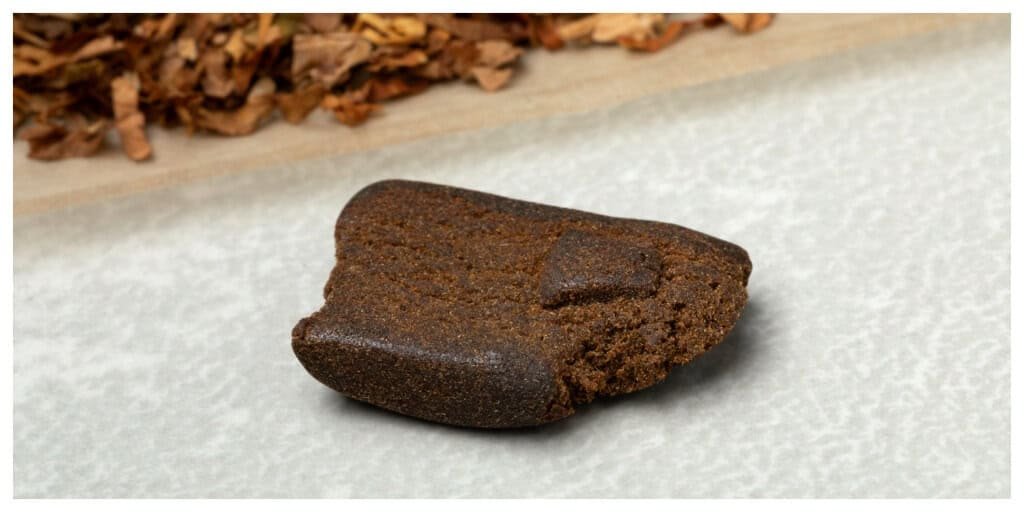
Tablet Hash represents the most familiar, traditional form to many cannabis consumers worldwide. Kief or other extracted resin is compressed with carefully applied heat and substantial pressure into solid blocks, bricks, or tablets of varying sizes. The color, texture, density, and potency can range widely depending on the cannabis strain used, the extraction technique employed, and the specific pressing methods applied, creating everything from light, crumbly blond hash to dense, sticky black varieties.
Different Types of Hashish | Pure Hashish For Sale Online
Acorn (or Roe) Hash: The Smuggler’s Innovation
Acorn Hash, also called Roe Hash due to its resemblance to fish eggs, gets its distinctive name from its unique shape: small, tightly compressed pellets or spheres. These were historically made primarily for smuggling purposes, designed with a size and shape that could be swallowed for transport across international borders, then retrieved later. While this form represents an interesting part of hash history and the lengths people went to transport cannabis, it’s not something you’re likely to encounter in modern legal markets, and Canna Center Dispensary certainly doesn’t carry products designed for such purposes!
CBD Hash: A Legal, Non-Intoxicating, and Relaxing Alternative
Not everyone who appreciates cannabis is looking for the intense psychoactive high that THC-rich hash can bring. Many people seek the therapeutic benefits, relaxation, and wellness aspects of cannabis without the intoxication. That’s precisely where CBD hash has found its audience and carved out an important niche in the modern cannabis market.
Made from CBD-rich, THC-compliant cannabis flowers (often called hemp when THC levels are below 0.3%), this form of hash offers many of the same rich aromas, complex flavors, and therapeutic benefits as traditional hashish, but with little to no psychoactive effect. The experience is genuinely relaxing and calming without producing the “high” associated with THC, making it ideal for stress relief, anxiety management, pain reduction, inflammation control, and those who want to experience the cannabis plant’s benefits without any head high or impairment.
Plus, since properly produced CBD hash contains negligible THC levels (typically less than 0.3% in compliance with federal hemp laws), it’s fully legal in many jurisdictions where THC products remain prohibited, making it accessible to consumers without worrying about legality, employment drug testing, or obtaining products from questionable sources.
At Canna Center Dispensary, we’ve witnessed firsthand how CBD hash opens the door for people who are curious about cannabis but cautious about intoxication, offering the best aspects of the plant, the rich terpene profiles, the ritual of consumption, the therapeutic effects, without the side effects or legal concerns that might scare newcomers away or prevent certain individuals from benefiting from cannabis.
Our CBD hash selection includes various styles and potencies, all rigorously tested for cannabinoid content and purity, ensuring you receive exactly what you expect.
Wrapping It All Up: Understanding Hash Quality, Pricing, Safety, and Making Informed Choices
After exploring the many diverse forms, production methods, and regional varieties of hash in considerable detail, it’s entirely natural to wonder: what makes one hash better than another? What should I look for? How do I know I’m getting quality? The truth is, there isn’t a simple, one-size-fits-all answer to these questions. A great deal comes down to personal taste preferences, the specific extraction method employed, the quality of the source material used, and what you’re hoping to achieve with your cannabis experience.
Defining Quality: What Makes Hash Truly Exceptional?
When we talk about “the best hash,” we’re really discussing craftsmanship, attention to detail, and the care taken throughout the entire production process. Hash made from top-shelf, carefully cultivated cannabis, handled meticulously through solventless methods like premium Dry Sift or high-grade Bubble Hash, often delivers the cleanest flavors, most enjoyable effects, and most satisfying overall experience. Classic varieties like Moroccan or Afghan hash have earned their stellar reputation over centuries of refinement, but modern extracts like professionally produced BHO and Live Resin also attract many enthusiasts for their incredible intensity, preserved terpene profiles, and consistent potency.
At Canna Center Dispensary, we’ve learned through years of experience that premium hash should exhibit several key characteristics:
Cleanliness: No harsh chemical tastes, no throat irritation beyond what’s normal for concentrated cannabis, no unpleasant aftertastes.
Aroma: Pleasant, complex, and true to the source cannabis strain, with rich terpene profiles that engage the senses.
Appearance: High-quality hash usually displays pleasant earthy tones, ranging from brown to amber to golden, though some excellent hashes are dark and sticky. What you want to avoid are dull, lifeless colors or any signs of contamination.
Combustion Test: A simple but effective quality test involves holding a flame near the hash—good hash should bubble slightly and melt rather than spark or catch fire, a sign of purity and proper production.
Effects: Clean, predictable, and appropriate to the variety, without unexpected harshness, headaches, or unpleasant side effects that might indicate contamination or poor production.
Understanding Pricing: Why Some Hashes Command Premium Prices
Just like fine wine, artisanal coffee, or craft spirits, hash pricing often reflects rarity, labor intensity, production risks, and market demand rather than simply the cost of raw materials.
Imported hashes from legendary regions like Lebanon, Pakistan, Nepal, or Morocco can carry substantial price tags due to their limited availability in legal markets, the risks involved in international transport, import duties and taxes, and the cachet associated with authentic, traditionally produced varieties.
Advanced extraction techniques like BHO, Live Rosin, or ultra-refined Dry Sift require specialized, expensive equipment, skilled technicians with extensive training, significant time investment, and substantial amounts of high-quality starting material to produce relatively small quantities of finished product, all of which drives up costs.
Ultra-rare varieties like Malana Cream from India’s remote Malana Valley, certain vintage Moroccan hashes, or limited-edition craft extracts from renowned producers can command extraordinary prices, sometimes hundreds of dollars per gram, due to their scarcity, reputation, and the devoted following among collectors and connoisseurs.
At Canna Center Dispensary, we strive to offer hash at various price points, ensuring that whether you’re looking for an affordable daily option or a special-occasion splurge, you’ll find something that fits your budget without compromising on safety or basic quality standards.
Health Considerations: Is Any Hash “Healthier” or Safer?
While no form of hash can technically be called “healthy” in the conventional sense, especially when combusted and smoked, which produces tar and other potentially harmful byproducts, certain types are generally safer, cleaner, and potentially less harmful than others.
Solventless hashes made with clean, natural extraction methods like hand-rubbing, dry sifting, ice water extraction, or rosin pressing are generally considered the safest options because they involve no chemical solvents whatsoever, eliminating any possibility of residual solvent contamination. These methods produce concentrates that are as close to “natural” as cannabis concentrates can be.
CBD hash represents an excellent alternative for those who want to experience the calming, therapeutic effects of cannabis without THC’s psychoactive impact, making it suitable for daytime use, for individuals sensitive to THC, or for those who need to avoid intoxication for work or personal reasons. Because CDB Hahs is often made through gentle, natural processes and must comply with strict THC limits, it also tends to avoid the potential dangers of leftover solvents or contaminants sometimes found in poorly made THC concentrates from unregulated sources.
Vaporization versus combustion: Regardless of which type of hash you choose, vaporizing at controlled temperatures rather than smoking produces fewer harmful byproducts and often provides a cleaner, more flavorful experience while potentially reducing respiratory irritation.
Source matters enormously: Perhaps the single most important health consideration is purchasing from licensed, reputable vendors like Canna Center Dispensary, who test their products for contaminants, verify potency, and ensure proper production standards were followed.
A Quick Word on “White Hash”: The Pale Exception
Now and then, you might hear about or encounter white hash and wonder what makes it different. This isn’t a completely separate category of product, but rather a lighter, paler form of Bubble Hash or Ice Water Hash made from sativa-dominant cannabis plants that were harvested before the trichomes fully matured and darkened. The result is a pale, almost white-colored resin that’s still quite potent but offers a distinct flavor profile, often more floral, citrusy, or herbal, and effects that many users describe as more energetic and cerebral compared to darker hashes.
What to Avoid: The Worst Kind of Hash and How to Protect Yourself
If there’s one type of hash to absolutely steer clear of, it’s adulterated, contaminated, or counterfeit hashish from unreliable, unlicensed sources. In unregulated black markets, some unscrupulous producers mix low-quality hash with fillers, contaminants, or even genuinely harmful substances to increase weight, improve appearance, or enhance perceived potency, all in pursuit of greater profit at the expense of consumer safety.
Common adulterants have included:
- Sand, dirt, or other inert materials to add weight
- Henna, shoe polish, or other substances to darken the color
- Pine resin or other sticky substances to improve texture
- Synthetic cannabinoids are used to artificially boost potency
- Mold, bacteria, or pesticides from poor production practices
That’s precisely why sourcing from trusted, licensed, rigorously tested vendors like Canna Center Dispensary is absolutely crucial, not just for quality and getting what you pay for, but fundamentally for your health and safety. Every product we carry undergoes comprehensive laboratory testing for potency, residual solvents, pesticides, heavy metals, microbial contaminants, and other potential hazards, ensuring that what you purchase is exactly what it claims to be and is safe for consumption.
The Bottom Line: Hash Offers Something for Everyone
Hashish has been an integral part of cannabis culture for countless centuries, and its many diverse forms offer something valuable for every type of consumer, from the curious beginner taking their first tentative steps into concentrates to the seasoned connoisseur with decades of experience seeking the absolute finest products available.
Whether you’re drawn to the rich history and cultural significance of Moroccan and Afghan hash, fascinated by the clean power and modern innovation of rosin and bubble hash, intrigued by the intense potency of BHO and other solvent-based extracts, or simply looking for a safe, non-psychoactive option like CBD hash that provides therapeutic benefits without intoxication, understanding the production methods, regional variations, and quality indicators behind these products will invariably lead to a better, more satisfying, and safer experience.
At Canna Center Dispensary, our mission extends far beyond simply selling cannabis products. We’re committed to education, transparency, and helping every customer, regardless of their experience level, make informed decisions that align with their needs, preferences, and wellness goals. Our knowledgeable staff has extensive experience with all forms of hash and can guide you toward the perfect product for your specific situation, whether you’re seeking pain relief, recreational enjoyment, creative inspiration, or simply a good night’s sleep.
We invite you to visit Canna Center Dispensary to explore our carefully curated selection of premium hash from around the world, and produced using various traditional and modern methods. Every product has been selected for quality, tested for safety and potency, and is backed by our commitment to your satisfaction and wellbeing.
Experience the rich tradition, remarkable diversity, and exceptional quality of hashish with Canna Center Dispensary, where centuries of cannabis culture meet modern standards of excellence, safety, and customer service. Your journey into the world of hash begins here.