
How to Make Cannabutter: Comprehensive Expert Guide to Cannabis-Infused Butter
If you’re genuinely passionate about cannabis culinary arts, mastering how to make cannabutter can dramatically expand your cooking horizons. Cannabutter, alternatively known as cannabis-infused butter or marijuana butter, serves as a fundamental ingredient when it comes to preparing cannabis-enhanced dishes. It performs exceptionally well in virtually all savory and sweet recipes that traditionally call for butter.
This remarkable versatility makes it extraordinarily popular among those seeking to incorporate the therapeutic and recreational effects of cannabis into their everyday meals and special occasion dishes.
In this comprehensive article, we’ll thoroughly explain how to make cannabis butter from scratch, provide expert tips to help you achieve the perfect cannabutter recipe every time, and share innovative ideas for incorporating it into your everyday cooking repertoire. This detailed guide will empower you to fully enjoy and maximize the potential of your cannabis-infused culinary creations with confidence and precision.
How to Make Cannabutter | Marijuana Cannabutter Online
What Is Cannabutter?
Cannabutter is fundamentally butter that’s been meticulously infused with cannabis, specifically containing THC (tetrahydrocannabinol), the primary compound responsible for producing psychoactive effects. The creation process involves carefully heating the cannabis to activate its cannabinoids through a critical step known as decarboxylation, followed by gently simmering it with butter to thoroughly infuse it.
This sophisticated method allows cannabutter to be utilized just like conventional butter in virtually any recipe, making it a subtle, delicious, and enjoyable way to experience cannabis benefits through food.
Individuals who regularly cook with cannabis might also be familiar with cannabis oils. Cannabis oils provide a comparable function but come in a distinctly different form. These oils are manufactured using carrier substances like coconut oil, olive oil, or other plant-based oils.
They’re generally considered exceptionally versatile and can be an excellent fit for recipes where a less pronounced flavor profile is desired, unlike the distinctive buttery taste that cannabutter imparts to dishes.
Choosing between cannabutter and cannabis oils ultimately comes down to personal preference, dietary considerations, and the specific demands of your particular recipes. Both options offer robust, effective ways to seamlessly integrate cannabis into your culinary creations.
At Canna Center Dispensary, we understand the importance of quality ingredients when creating cannabis-infused products, which is why we offer premium cannabis flower specifically selected for cooking and infusion purposes.
Understanding Cannabis Potency and Selection
Before diving into the cannabutter-making process, it’s essential to understand cannabis potency and how to select the right strain for your needs. Different cannabis strains contain varying levels of THC and CBD, which will directly impact the strength and effects of your finished cannabutter.
When shopping at Canna Center Dispensary, our knowledgeable staff can help you select the appropriate cannabis flower based on your desired potency level and intended effects. Whether you’re seeking a high-THC strain for more pronounced psychoactive effects or a balanced THC/CBD ratio for therapeutic benefits with milder psychoactivity, we have options to suit every preference.
Consider these factors when selecting cannabis for cannabutter:
- THC percentage: Higher percentages will produce more potent cannabutter
- Strain type: Indica, sativa, or hybrid strains offer different effect profiles
- Freshness: Fresh, properly cured cannabis produces better-tasting and more effective cannabutter
- Quality: Premium cannabis from Canna Center Dispensary ensures consistent results
The Critical Importance Of Decarboxylation For Making Cannabutter
Decarboxylation represents an absolutely crucial step in making effective cannabutter because it activates the essential components in cannabis, such as THC and CBD, which are necessary for producing the effects we expect from edibles and cannabis-infused foods.
In raw, unprocessed cannabis, the substances that affect us (THC and CBD) aren’t actually in their active form. They begin in an acidic precursor form (THCA and CBDA) that doesn’t significantly impact you physiologically. We need to apply controlled heat to transform them into a state where they can produce noticeable effects.
By baking the cannabis at a specific, carefully controlled temperature, it undergoes a chemical transformation where a carboxyl group of its molecule is released as carbon dioxide gas. This molecular change transforms the inactive acidic substances into active cannabinoids that can genuinely make a substantial difference when consumed through edibles.
Without proper decarboxylation, your cannabutter will be significantly less potent or potentially ineffective, wasting both your cannabis and your time. This is why Canna Center Dispensary emphasizes the importance of this step to all our customers interested in creating homemade edibles.
So, how do you make cannabutter properly? In the following section, we’ll demonstrate exactly how to make cannabutter step-by-step, including everything you need to get started successfully.
Step-By-Step Comprehensive Guide To Making Cannabutter
Here is a detailed, step-by-step guide on how to make cannabutter with professional results:
What You’ll Need
Ingredients:
- Cannabis flower (7-10 grams per cup of butter, adjust based on desired potency)
- Unsalted butter (1 cup or more, depending on batch size)
- Water (sufficient to prevent burning)
Equipment:
- Baking sheet
- Parchment paper or aluminum foil
- Oven with accurate temperature control
- Medium saucepan or slow cooker
- Cheesecloth or fine mesh strainer
- Airtight storage container
- Spatula or wooden spoon
- Thermometer (optional but recommended)
- Grinder (optional)
1. Decarboxylation Of Cannabis
To properly activate the psychoactive and therapeutic components in cannabis, you absolutely must decarboxylate it correctly. Preheat your oven to precisely 240°F (115°C). Break the cannabis buds into smaller, uniform pieces without grinding them into powder at this stage.
Spread the broken cannabis pieces evenly across a baking sheet lined with parchment paper, ensuring they’re in a single layer for consistent heating. Bake for 30-40 minutes, gently turning the cannabis occasionally to ensure even heating throughout. The cannabis should turn a light to medium brown color and become noticeably dry and crumbly.
Once the decarboxylation process is complete, remove the baking sheet from the oven and allow the cannabis to cool completely to room temperature before proceeding to the next step.
Pro tip from Canna Center Dispensary: The quality of your starting material significantly impacts your final product. Always use properly cured, high-quality cannabis from a reputable source like Canna Center Dispensary for optimal results.
2. Breaking Down Cannabis Into Ground Form
Grind the decarboxylated cannabis appropriately, but exercise caution not to overdo it. A coarse to medium grind is considerably better than a fine powder consistency. Avoid grinding it into an extremely fine, peanut butter-like consistency, as this will make the finished butter unpleasantly gritty and difficult to strain properly.
You can use a standard herb grinder, break it apart by hand, or use kitchen scissors. The goal is to increase surface area for better infusion while maintaining pieces large enough to strain out easily.
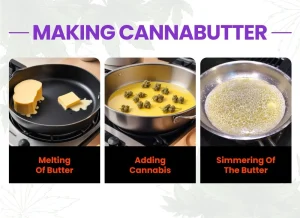
3. Melting The Butter And Infusing It With Cannabis
Melt the unsalted butter in a medium saucepan over low heat, adding approximately one cup of water to help regulate temperature and prevent burning. The amount of butter you use determines the final potency of your cannabutter.
A common and effective ratio is one cup of butter to 7-10 grams of ground cannabis, though this can be adjusted based on your tolerance and desired strength. Add the ground cannabis once the butter is completely melted and the mixture is gently simmering.
Maintain the heat between 160-180°F (70-82°C) throughout the infusion process and infuse the cannabis into the butter for 2-3 hours minimum, stirring occasionally every 20-30 minutes. It’s absolutely critical to avoid boiling, as excessive heat will degrade the cannabinoids and produce a burnt, unpleasant taste.
The mixture should maintain a gentle simmer with small bubbles occasionally breaking the surface. If you notice vigorous boiling, immediately reduce the heat. Using a cooking thermometer ensures you maintain the optimal temperature range throughout the infusion period.
4. Straining The Infused Butter
Straining is absolutely crucial for achieving a smooth, professional consistency and completely removing plant material that would otherwise create an unpleasant texture and appearance. After the infusion period is complete, remove the saucepan from the heat and let the mixture cool slightly for 5-10 minutes.
Position cheesecloth or a fine mesh strainer over a heatproof container, ensuring it’s secure and won’t slip. Carefully pour the melted cannabutter mixture through the strainer, using a spatula to press down firmly on the cannabis plant material to extract every last drop of infused liquid.
Be patient during this process—thorough straining makes a significant difference in the quality of your final product. Discard the spent plant material once you’ve extracted all the butter (it can be composted if desired).
5. Cooling And Setting The Cannabutter
After straining is complete, let the infused butter cool briefly at room temperature for approximately 15-20 minutes. Transfer the liquid cannabutter to a clean, airtight container or mold and refrigerate for several hours (typically 4-6 hours minimum, or overnight for best results) until completely solidified.
If you added water during the cooking process, it will separate and settle beneath the butter layer. Once the butter has solidified, you can easily remove the solid butter disk and discard the water underneath, which may contain some impurities and water-soluble compounds.
This separation process ensures maximum purity and consistency. Once solid, your cannabutter is ready for immediate use in various recipes or can be stored for future culinary adventures.
Storage recommendation from Canna Center Dispensary: Store your finished cannabutter in an airtight container in the refrigerator for up to two weeks, or freeze it for up to six months for extended storage. Always label your cannabutter clearly with the date and estimated potency to ensure safe consumption.
Alternative Methods For Making Cannabutter
There are several effective methods for making cannabutter using common kitchen appliances and specialized equipment. Each method offers distinct advantages and disadvantages, depending on the available equipment, your experience level, and personal cooking preferences.
However, it’s critically important to note that regardless of which infusion method you ultimately choose, you will still need to utilize an oven for the essential decarboxylation process described above.
Cannabutter Machine Method
Using specialized infusion machines designed specifically for creating cannabis-infused products dramatically simplifies the entire process. These dedicated machines offer several significant benefits, including precise temperature control, completely hands-free operation, automated timing, and efficient mixing that ensures consistent results.
To use a cannabutter machine effectively, simply place your decarboxylated cannabis and butter into the device according to the manufacturer’s instructions and secure the lid properly. Press the Temperature button and select 160°F/71°C, then press the designated time button (typically 2 Hours for butter infusion) to initiate the automated infusion process.
After the programmed cycle is complete, unplug the unit for safety, carefully remove the lid, and pour the infused mixture through your strainer or the included filter into your desired storage container.
This method ensures thorough, consistent mixing and temperature control without requiring constant monitoring, making it ideal for beginners or those who prefer a more hands-off approach.
Canna Center Dispensary recommends investing in a quality infusion machine if you plan to make cannabutter regularly, as it produces consistently excellent results with minimal effort.
Instant Pot Cannabutter Method
Making cannabutter in an Instant Pot or similar electric pressure cooker offers a faster, more contained method that minimizes odor. Start by wrapping your decarboxylated cannabis in aluminum foil and placing it in the Instant Pot on the ‘Keep Warm’ setting for approximately 40 minutes if you haven’t already decarboxylated in the oven.
After decarboxylation, grind the heated cannabis to your desired consistency and combine it with butter and a small amount of water in the Instant Pot insert. Secure the lid tightly, ensuring the pressure valve is in the sealed position, and cook on low pressure for 20 minutes.
The Instant Pot effectively seals in the distinctive cannabis aroma and uses pressure to facilitate efficient infusion, making it a relatively quick and discreet option for apartment dwellers or those concerned about odor.
After the cooking cycle completes, allow for natural pressure release for best results, then strain as described in the standard method above.
Crock Pot Cannabutter Method
If you’re interested in learning how to make cannabutter in a crock pot or slow cooker, this section provides detailed instructions! The slow cooker method is excellent for maintaining consistent low temperatures over extended periods.
To make crockpot cannabutter, start by decarboxylating your cannabis in the oven as previously described. Preheat your oven to 240-250°F and spread your cannabis on a parchment-lined baking sheet. Bake it for approximately 30-40 minutes, checking periodically.
Meanwhile, in a small crockpot set to the lowest heat setting, melt 3/4 cup of unsalted butter along with approximately 1/4 cup of water. Once your cannabis is properly decarboxylated and cooled, you can either place it in a reusable basket coffee filter or add it directly to the melted butter.
Allow it to steep in the melted butter for approximately 3-4 hours, stirring occasionally every 30-45 minutes to ensure even infusion. The extended, gentle heating of a slow cooker produces excellent results with minimal risk of overheating.
Afterward, let the cannabutter mixture cool for about an hour to a safe handling temperature, then strain out the used cannabis plant material using cheesecloth or the filter basket, squeezing thoroughly to extract all the infused butter.
You’ll end up with approximately 1/2 to 2/3 cup of strained cannabutter (depending on absorption), ready to use immediately in your favorite recipes or store for future use.
Stove Top Cannabutter Method
The traditional stovetop method remains popular because it requires no special equipment beyond basic cookware. To make stove-top cannabutter, you’ll need to decarboxylate your cannabis by baking it in the oven first, as this cannot be effectively accomplished on the stovetop alone.
Preheat your oven to 220-240°F, break up the buds into large, uniform pieces, and spread them evenly on a parchment-lined baking sheet in a single layer. Bake for 20 minutes for lower-quality or older cannabis, 45 minutes for high-grade, properly cured cannabis, or 1 hour or more for freshly harvested wet cannabis that hasn’t been dried and cured.
Stir the cannabis every 10 minutes to prevent burning and ensure even decarboxylation until the color changes to a deep brownish-green, clearly indicating successful decarboxylation. Once cooled completely, break up the cannabis to your desired consistency using your hands or a grinder.
Next, for the stovetop infusion process, gather 1½ cups of water, 8 oz. (two sticks) of clarified or unsalted butter, and ½ oz. of decarboxylated cannabis. In a medium saucepan over very low heat, combine the water and butter until completely melted, then add the ground cannabis, stirring well to distribute evenly.
Cover the saucepan with a lid and simmer gently for a minimum of 4 hours (some experienced users prefer 6-8 hours for maximum potency), stirring every half hour to prevent burning and ensure even infusion. Ensure the temperature stays consistently below 180°F throughout the entire process, use a thermometer for accuracy.
After the infusion period is complete, carefully strain the mixture through multiple layers of cheesecloth or a fine mesh strainer into a heat-safe container, allowing it to cool to room temperature before refrigerating or using in recipes.
The stovetop method requires more attention and monitoring than other methods but produces excellent results when done carefully and patiently.
Calculating Cannabutter Dosage: Essential Information
When it comes to making cannabutter safely and effectively, finding the right balance between cannabis quantity and butter volume is absolutely crucial for achieving your desired potency level. Several important factors, such as the THC percentage of your cannabis, the desired potency of the finished cannabutter, and the total amount of butter used, need to be carefully considered.
Understanding dosage calculations helps ensure you create edibles that are both effective and safe to consume, preventing uncomfortable experiences from overconsumption.
For instance, if you have 1 gram of cannabis containing 15 percent THCA, it will yield approximately 150 milligrams of THCA. After decarboxylation, this converts to roughly 131 milligrams of active THC (accounting for approximately 12% loss during the heating process).
As a starting dose for those new to edibles or with low tolerance, Canna Center Dispensary strongly recommends consuming just 2.5 to 5 milligrams of THC and waiting at least 2 hours before considering consuming more.
Let’s break down a practical dosage calculation further for clarity. If you use 7 grams of cannabis containing 15% THC to make one cup of cannabutter, you’ll have approximately 918 milligrams of THC total in that cup of butter. If you then use that entire cup of butter to bake 2 dozen (24) cookies, each cookie will contain approximately 38 milligrams of THC.
For beginners, this would be quite strong, so you might want to start by consuming just one-quarter of a cookie (approximately 9.5 mg THC), wait 1.5 to 2 hours to fully gauge the effects, and then decide if you want to consume more. Canna Center Dispensary suggests adding no more than a quarter of the cookie at a time to avoid consuming too much THC too quickly, which can lead to uncomfortable experiences.
Dosage Calculation Formula
Here’s a simple formula to calculate the approximate THC content per serving:
(Grams of cannabis × THC percentage × 1000 × 0.88) ÷ Number of servings = mg of THC per serving
The 0.88 factor accounts for approximately 12% cannabinoid loss during decarboxylation and cooking processes.
Important note from Canna Center Dispensary: Edibles affect everyone differently based on metabolism, body weight, tolerance, and whether consumed on an empty or full stomach. Always start with a low dose, especially if you’re new to cannabis edibles, and increase gradually over multiple sessions until you find your optimal dose.
Benefits Of Cannabutter: Why Choose This Method
Certainly! Here are five significant benefits of using cannabutter for cannabis consumption:
1. Exceptional Versatility
Cannabutter can be seamlessly incorporated into an extraordinarily wide variety of recipes, from sweet treats like cookies, brownies, cakes, and frostings to savory dishes like pasta sauces, salad dressings, sautéed vegetables, and compound butters for steaks. Its remarkable versatility allows for creative culinary experimentation and the incorporation of cannabis into different types of foods across all meal categories.
You can substitute cannabutter for regular butter in virtually any recipe, making it one of the most adaptable cannabis consumption methods available.
2. Complete Customization
By making your own cannabutter at home using quality cannabis from Canna Center Dispensary, you have full control over the potency, dosage, and even flavor profile of your edibles. This allows you to precisely tailor the strength of the infused butter to your individual preferences, tolerance levels, and desired effects, ensuring a completely personalized cannabis experience.
You can create mild cannabutter for daytime use or more potent versions for evening relaxation, all from the same basic process with simple ratio adjustments.
3. Extended Longevity
Properly stored cannabutter can have a relatively long shelf life, especially when kept refrigerated in an airtight container or frozen for extended storage. This makes it incredibly convenient to prepare a large batch of cannabutter in advance and use it gradually over time, without worrying about it spoiling quickly or losing potency.
Refrigerated cannabutter typically remains fresh and potent for 2-3 weeks, while frozen cannabutter can last 6 months or longer, providing excellent value for your time and cannabis investment.
4. Ease and Discretion of Consumption
Consuming cannabis-infused edibles made with cannabutter offers a discreet, smoke-free, and convenient way to experience the effects of cannabis without the need for smoking or vaping. This makes edibles an attractive option for individuals who prefer to avoid inhalation methods, who may have respiratory concerns, or who need to consume cannabis discreetly in situations where smoking isn’t appropriate or permitted.
Edibles also provide longer-lasting effects compared to inhalation methods, typically 4-8 hours versus 1-3 hours for smoking.
5. Enhanced Flavor Profile
Cannabutter not only effectively carries the cannabinoids from cannabis but also contributes positively to the overall flavor profile of edibles when made properly. Its rich, creamy texture and buttery taste complement a wide range of ingredients, helping to create delicious and enjoyable culinary creations with a subtle hint of cannabis that enhances rather than overwhelms the dish.
When made with quality cannabis from Canna Center Dispensary and properly strained, cannabutter adds a pleasant, slightly herbal note that many cannabis enthusiasts appreciate.
How Is Cannabutter Used to Make Edibles?
Cannabutter serves as the foundational ingredient for making cannabis-infused foods and represents the primary method for incorporating cannabis into edible products. It’s essentially the main ingredient that carries the active cannabinoids into the food. Here’s how it works scientifically and practically:
Fat Solubility: The Science Behind Cannabutter
Cannabis contains active compounds called cannabinoids, primarily THC and CBD, that produce the psychoactive and therapeutic effects users seek. These cannabinoid molecules are lipophilic, meaning they dissolve and bind exceptionally well with fats and oils, like butter, but not with water.
So, when you cook cannabis with butter over time at controlled temperatures, those THC and CBD molecules get absorbed into the butter’s fat content. This fat-binding property makes it significantly easier for your body to absorb and metabolize them when you eat the infused butter, as your digestive system is designed to break down and absorb dietary fats efficiently.
Without fat as a carrier, cannabinoids would pass through your digestive system largely unabsorbed, wasting the cannabis and producing minimal effects.
Flavor Masking and Enhancement
Raw cannabis has a strong, distinctly earthy, sometimes bitter taste that not everyone finds pleasant, especially in higher concentrations. However, butter has a rich, creamy, universally enjoyed taste that most people find delicious.
When you properly infuse cannabis with butter and strain it thoroughly, the butter helps significantly mask that pronounced earthy taste, making the food much more palatable and enjoyable. The butter’s fat content also helps distribute the cannabis flavor more evenly throughout the dish, preventing concentrated “hot spots” of cannabis taste.
Popular Examples of Cannabutter Edibles
Cannabutter is used in countless food applications, limited only by your culinary imagination. Some popular edible applications include:
Baked Goods: Classic cannabis cookies and brownies remain perennial favorites, which can be made by simply swapping regular butter with cannabutter in your favorite recipe, infusing each bite with precisely measured cannabis. Cakes, muffins, scones, and pastries also work beautifully with cannabutter.
Confections: While gummies and hard candies often use cannabis oils or tinctures, cannabutter adds a richer texture and more complex flavor to confections like fudge, caramels, toffee, and chocolate truffles, giving candies a special, gourmet twist.
Savory Dishes: Cannabutter also enhances savory applications like pasta sauces (especially cream-based sauces), compound butters for steaks and seafood, salad dressings, sautéed vegetables, mashed potatoes, and even popcorn topping, adding a subtle hint of cannabis flavor to everyday meals while providing the desired effects.
Beverages: Cannabutter can be incorporated into hot beverages like cannabis-infused coffee, tea, hot chocolate, or even blended into smoothies for a cannabis-enhanced drink experience.
The key to successful edible creation is ensuring even distribution of cannabutter throughout your recipe and accurate dosage calculation so each serving contains a consistent, predictable amount of THC.
Getting Cannabis Legally For Cannabutter
In many jurisdictions with legal cannabis programs, medical and recreational cannabis patients can legally purchase cannabis to make cannabutter and other edibles for personal consumption. As a licensed dispensary, Canna Center Dispensary offers an extensive range of high-quality cannabis products, including premium flower, trim, and concentrates, all perfect for crafting your own infused creations at home.
If you’re a resident or visitor in an area with legal cannabis, obtaining the proper documentation (such as a Medical Cannabis Card where required) is the first essential step to accessing cannabis legally and safely. Our knowledgeable team at Canna Center Dispensary can guide you through the quick and straightforward process to obtain your card if needed, ensuring you stay fully compliant with local laws while enjoying your cannabis-infused cooking adventures.
Why Choose Canna Center Dispensary for Your Cannabutter Cannabis
When purchasing cannabis specifically for making cannabutter, always choose a licensed, reputable dispensary like Canna Center Dispensary to ensure:
- Quality: Lab-tested cannabis free from pesticides, mold, and contaminants
- Potency accuracy: Verified THC/CBD percentages for accurate dosage calculations
- Variety: Multiple strains and potency levels to suit your preferences
- Safety: Compliance with all local regulations and safety standards
- Expert guidance: Knowledgeable staff who can recommend the best products for your specific needs
- Consistency: Reliable products that produce predictable results every time
Canna Center Dispensary takes pride in offering only the finest cannabis products specifically selected for both recreational enjoyment and culinary applications. Our staff receives regular training on cannabis cooking techniques and can provide personalized recommendations based on your experience level, desired effects, and budget.
Choosing the Right Cannabis Product for Cannabutter
When shopping at Canna Center Dispensary for cannabutter ingredients, consider these options:
Premium Flower: Our top-shelf flower offers the best flavor profile and highest potency for gourmet cannabutter. Ideal for special occasions or when you want the absolute best results.
Mid-Grade Flower: Excellent quality at a more accessible price point, perfect for regular cannabutter making. Provides great potency and flavor without premium pricing.
Trim and Shake: A budget-friendly option that works wonderfully for cannabutter, as the infusion process extracts cannabinoids efficiently regardless of bud structure. This is often the most economical choice for making large batches.
Concentrates: For those seeking extremely potent cannabutter, cannabis concentrates can be added to butter-based infusions, though this requires careful dosage calculation and is recommended only for experienced users.
Our staff at Canna Center Dispensary can help you calculate exactly how much cannabis you’ll need based on your desired batch size and potency level, ensuring you purchase the right amount without waste.
Storage and Shelf Life of Cannabutter
Proper storage is essential for maintaining the potency, flavor, and safety of your cannabutter over time. Here are comprehensive storage guidelines:
Short-Term Storage (Up to 2-3 Weeks)
Store your cannabutter in an airtight container in the refrigerator at temperatures between 35-40°F. Glass containers with tight-fitting lids work exceptionally well, as do food-grade plastic containers. Always label your container clearly with:
- The date of preparation
- Estimated THC content per tablespoon or per serving
- A clear “cannabis-infused” warning
- Storage instructions
Keep cannabutter away from strong-smelling foods in your refrigerator, as butter readily absorbs odors.
Long-Term Storage (Up to 6 Months)
For extended storage, freeze your cannabutter in airtight, freezer-safe containers or wrapped tightly in parchment paper and then aluminum foil. Consider portioning your cannabutter into smaller amounts (such as tablespoon-sized portions) before freezing, so you can thaw only what you need for each recipe.
Frozen cannabutter maintains its potency and quality for approximately 6 months when stored properly at 0°F or below. Thaw frozen cannabutter in the refrigerator overnight before use, never at room temperature, to prevent bacterial growth.
Signs of Spoilage
Discard cannabutter if you notice:
- Off or rancid smell
- Mold growth (fuzzy spots of any color)
- Significant color change (darkening or yellowing beyond normal)
- Slimy or unusual texture
- Separation that doesn’t resolve when stirred
Canna Center Dispensary recommends always erring on the side of caution—when in doubt, throw it out and make a fresh batch.
Safety Considerations and Responsible Use
Creating and consuming cannabis edibles requires responsibility and awareness. Canna Center Dispensary emphasizes these important safety considerations:
Dosage and Consumption Safety
- Start low, go slow: Begin with 2.5-5mg THC for beginners, waiting at least 2 hours before consuming more
- Edibles take time: Effects typically begin 30-90 minutes after consumption and peak at 2-4 hours
- Effects last longer: Edible effects can last 4-8 hours or more, significantly longer than smoking
- Don’t mix with alcohol: Combining cannabis edibles with alcohol can intensify effects unpredictably
- Know your tolerance: Regular cannabis users may require higher doses, but should still start conservatively with edibles
Storage and Access Safety
- Keep away from children and pets: Store all cannabis products in locked containers out of reach
- Clear labeling: Always label cannabis-infused products clearly to prevent accidental consumption
- Separate storage: Keep cannabutter separate from regular butter to prevent mix-ups
- Inform household members: Ensure everyone in your home knows which products contain cannabis
Legal Considerations
- Know local laws: Cannabis laws vary by jurisdiction; ensure you’re compliant with local regulations
- Don’t drive: Never operate vehicles or heavy machinery after consuming cannabis edibles
- Workplace policies: Be aware of your employer’s cannabis policies, even in legal jurisdictions
- Travel restrictions: Don’t transport cannabis products across state or international borders
Canna Center Dispensary is committed to promoting safe, responsible cannabis use and is always available to answer questions about proper dosing, effects, and safety considerations.
Troubleshooting Common Cannabutter Problems
Even experienced cannabis cooks occasionally encounter issues. Here are solutions to common cannabutter problems:
Problem: Weak or Ineffective Cannabutter
Possible causes and solutions:
- Insufficient decarboxylation: Ensure you bake cannabis at 240°F for the full 30-40 minutes
- Too much butter for the amount of cannabis: Adjust your ratio to use more cannabis or less butter
- Infusion temperature too low: Maintain 160-180°F throughout the infusion process
- Infusion time too short: Extend infusion time to 3-4 hours for maximum potency
- Low-quality cannabis: Purchase lab-tested, potent cannabis from Canna Center Dispensary
Problem: Burnt or Bad-Tasting Cannabutter
Possible causes and solutions:
- Temperature too high during infusion: Use a thermometer and keep temperature below 180°F
- Insufficient water added: Add more water to prevent burning
- Inadequate straining: Strain through multiple layers of cheesecloth to remove all plant material
- Over-decarboxylation: Reduce oven time or temperature slightly
Problem: Grainy or Gritty Texture
Possible causes and solutions:
- Cannabis ground too finely: Use a coarser grind next time
- Insufficient straining: Strain multiple times through fine cheesecloth
- Plant material not fully removed: Press firmly when straining to separate all solids
Problem: Separation or Unusual Consistency
Possible causes and solutions:
- Normal water separation: Simply remove the solid butter layer and discard the water
- Insufficient cooling time: Allow more time for complete solidification
- Temperature fluctuations during storage: Maintain a consistent refrigerator temperature
If you continue experiencing issues, the knowledgeable staff at Canna Center Dispensary can provide personalized troubleshooting advice based on your specific situation.
Advanced Cannabutter Techniques
Once you’ve mastered basic cannabutter, consider these advanced techniques to elevate your cannabis cooking:
Flavored Cannabutter
Infuse your cannabutter with additional flavors by adding herbs, spices, or aromatics during the infusion process:
- Garlic herb cannabutter: Add fresh garlic, rosemary, and thyme
- Cinnamon cannabutter: Add cinnamon sticks and vanilla bean
- Lemon cannabutter: Add lemon zest and fresh lemon thyme
- Spicy cannabutter: Add red pepper flakes and black peppercorns
Add these flavoring ingredients during the last hour of infusion, then strain them out along with the cannabis plant material.
Clarified Cannabutter (Cannabis Ghee)
Clarified butter has a higher smoke point and longer shelf life than regular butter. To make cannabis ghee:
- Make regular cannabutter following the standard process
- Gently heat the strained cannabutter until it melts completely
- Skim off the foam that rises to the top
- Carefully pour the clear golden liquid into a container, leaving the milk solids at the bottom
- Store the clarified cannabutter at room temperature for up to 3 months or refrigerate for 6 months
Cannabutter with Multiple Strains
Blend different cannabis strains to create custom effect profiles:
- Balanced blend: Combine indica and sativa strains for balanced effects
- High-CBD blend: Mix high-THC and high-CBD strains for therapeutic benefits with reduced psychoactivity
- Terpene-focused blend: Combine strains with complementary terpene profiles for enhanced flavors and effects
Canna Center Dispensary staff can recommend strain combinations based on your desired effects and flavor preferences.
Conclusion
Making cannabutter is a rewarding, versatile, and creative way to explore the world of cannabis cooking and expand your consumption options beyond traditional methods. It serves as the essential foundation for creating a virtually unlimited variety of delicious cannabis-infused recipes, from sweet cookies and decadent brownies to savory sauces and gourmet compound butters.
You can completely customize the potency, flavor profile, and effects of your cannabutter to suit your personal preferences, dietary requirements, and tolerance level, giving you endless room for creativity and experimentation in the kitchen.
Whether you’re completely new to cannabis cooking or an experienced cannabis chef, having reliable access to high-quality cannabis from a licensed, reputable dispensary ensures your culinary creations are safe, effective, and consistently excellent. At Canna Center Dispensary, we’re here to help you find the perfect products to bring your culinary cannabis ideas to life—all while staying fully compliant with local cannabis laws and regulations.
Our knowledgeable staff is passionate about cannabis cooking and eager to share tips, answer questions, and recommend the ideal cannabis products for your specific cannabutter needs. We offer premium flower, economical trim, and everything in between, all lab-tested for purity and potency.
Visit Canna Center Dispensary today to explore our extensive selection of cannabis products perfect for making cannabutter, and let us help you embark on your cannabis culinary journey with confidence. Whether you’re making your first batch or your hundredth, we’re your trusted partner in cannabis cooking excellence.
Frequently Asked Questions (FAQs)
What Is The Best Ratio For Cannabutter?
The optimal ratio for making cannabutter depends significantly on your desired potency level and the THC percentage of the cannabis used. A common guideline for moderate-strength cannabutter is to use 7-10 grams (approximately 1/4 to 1/3 ounce) of cannabis to 1 cup (2 sticks) of butter.
For stronger cannabutter, you can increase to 14 grams (1/2 ounce) per cup of butter. For milder cannabutter suitable for beginners or daytime use, reduce to 3.5-5 grams per cup. This ratio can and should be adjusted based on the potency of the cannabis and your personal tolerance.
Canna Center Dispensary recommends starting with a moderate ratio and adjusting in future batches based on your experience with the results.
Is It 2 Or 3 Hours For Cannabutter?
Cannabutter is typically infused for approximately 2 to 3 hours minimum, though some experienced cannabis cooks prefer longer infusion times of 4-6 hours for maximum potency. Cooking it for 2 hours should be sufficient for effective infusion, but extending the infusion to 3-4 hours can potentially yield a stronger, more thoroughly infused result as it allows more time for the THC and other cannabinoids to fully bind with the butter’s fat molecules.
The key is maintaining the proper temperature range (160-180°F) throughout the entire infusion period, regardless of duration. Longer infusion times at proper temperatures generally produce more potent cannabutter without any negative effects, as long as the temperature remains controlled and doesn’t exceed 180°F.
How Much Water Do You Use In Cannabutter?
Adding water to your cannabutter infusion is optional but highly recommended by Canna Center Dispensary to help prevent the butter from burning and to ensure even heat distribution throughout the mixture. A typical approach is to add approximately 1-1.5 cups of water per cup of butter used, or just enough water to cover the butter and cannabis mixture in the pot by about an inch.
During the cooling and solidification process, the water will naturally separate from the butter, settling at the bottom of your container. This water layer may contain some impurities, water-soluble compounds, and excess chlorophyll, which is why it’s discarded after the butter solidifies. The water essentially acts as a temperature buffer and helps produce cleaner-tasting cannabutter.
How to Make Cannabutter: Comprehensive Expert Guide to Cannabis-Infused Butter
How Long Should I Infuse My Cannabutter For?
For optimal results and maximum potency, infusing your cannabutter for at least 2 to 3 hours on low, controlled heat is advisable as a minimum. However, many experienced cannabis cooks at Canna Center Dispensary prefer infusion times of 3-4 hours, and some even extend to 6-8 hours for extremely potent cannabutter.
This extended duration allows sufficient time for the THC and other beneficial cannabinoids to effectively bind with the fats in the butter, enhancing the overall potency and effectiveness of your cannabutter. The longer infusion time also helps extract more of the beneficial compounds from the plant material.
The critical factor is maintaining the proper temperature range (160-180°F) throughout the entire infusion period, longer times are beneficial only if temperature remains controlled. Never allow the mixture to boil vigorously, as this degrades cannabinoids and produces unpleasant flavors.
How Many Sticks Of Butter Is 1 Oz Of Cannabutter?
This question involves a slight confusion of terms, but here’s the clarification: When following the typical ratio of 1 ounce of cannabis to 1 pound of butter for making cannabutter, you would use four sticks of butter, since one pound of butter equals exactly four standard sticks (each stick is 1/4 pound or 4 ounces by weight).
Therefore, 1 ounce of cannabis is typically used to infuse four sticks (one pound) of butter, creating approximately 2 cups of finished cannabutter. However, “1 oz of cannabutter” as a finished product would be measured by weight (approximately 2 tablespoons), not by the amount of cannabis used to make it.
Canna Center Dispensary can help you calculate the exact amounts needed for your specific batch size and desired potency.
Can You Make Cannabutter In 30 Minutes?
It is generally not recommended to attempt making cannabutter in just 30 minutes, as this abbreviated timeframe does not provide sufficient time for the THC and other cannabinoids to adequately infuse into the butter’s fat molecules. Proper infusion typically requires a longer cooking time, usually a minimum of 2 hours (with 3-4 hours being ideal), to maximize the effectiveness and potency of the cannabutter.
Rushing the process by using higher temperatures to speed infusion will degrade the cannabinoids and produce inferior results with harsh flavors. The low-and-slow approach is essential for quality cannabutter.
However, the decarboxylation step (30-40 minutes) plus a 2-hour minimum infusion means the absolute fastest you could make cannabutter is approximately 2.5-3 hours total. Canna Center Dispensary always recommends patience for the best results—quality cannabutter cannot be rushed.
How Do I Know When My Cannabis Is Fully Decarboxylated?
Properly decarboxylated cannabis will exhibit several visual indicators: it will have changed from bright green to a darker brownish-green or light brown color, it will appear dry and slightly crispy, and it will crumble easily when touched. The distinctive fresh cannabis smell will have mellowed into a more toasted, nutty aroma.
If your cannabis still appears bright green and moist after the recommended baking time, it needs additional time in the oven. Conversely, if it appears very dark brown or black, it has been over-decarboxylated, and some potency has been lost.
Can I Use Already Vaped Bud (AVB) To Make Cannabutter?
Yes, already vaped bud (AVB) or already been vaped (ABV) cannabis can be used to make cannabutter, and it doesn’t require the decarboxylation step since the vaping process has already activated the cannabinoids. However, AVB typically has significantly reduced potency (often 20-30% of original strength) since much of the THC was consumed during vaping.
You’ll need to use substantially more AVB than fresh cannabis to achieve similar potency—typically 2-3 times as much. The flavor may also be more pronounced and less pleasant than cannabutter made with fresh cannabis. Canna Center Dispensary recommends using fresh, quality cannabis for the best-tasting and most potent cannabutter.
Is Cannabutter Legal To Make At Home?
The legality of making cannabutter at home depends entirely on your local jurisdiction’s cannabis laws. In areas where recreational or medical cannabis is legal, making cannabis edibles for personal consumption is typically permitted, though there may be restrictions on quantities and where consumption can occur.
Always verify your local laws before making cannabutter. Canna Center Dispensary operates in full compliance with all local regulations and can guide legal considerations in your area. Never transport cannabis products across state or international borders, even between two jurisdictions where cannabis is legal.
How Can I Make My Cannabutter Taste Better?
To improve cannabutter flavor:
- Use high-quality, properly cured cannabis from Canna Center Dispensary
- Ensure thorough decarboxylation to reduce chlorophyll content
- Add water during infusion to help remove water-soluble bitter compounds
- Strain thoroughly through multiple layers of cheesecloth
- Consider using clarified butter, which has a cleaner taste
- Add complementary flavors like vanilla, cinnamon, or herbs during infusion
- Use the cannabutter in recipes with strong flavors that complement cannabis
- Store properly to prevent rancidity, which creates off-flavors
Can I Make Cannabutter With CBD Flower?
Absolutely! The same process used for THC-rich cannabis works perfectly for CBD-rich hemp flower or high-CBD cannabis strains. CBD flower must also be decarboxylated to convert CBDA to active CBD, and the infusion process is identical.
CBD cannabutter provides therapeutic benefits without significant psychoactive effects, making it ideal for daytime use, anxiety relief, pain management, and inflammation reduction. Canna Center Dispensary offers various CBD-rich cannabis options perfect for making therapeutic cannabutter.
You can also create custom ratios by combining THC-rich and CBD-rich cannabis to achieve your desired effect profile.
Visit Canna Center Dispensary today for all your cannabis cooking needs. Our expert staff is ready to help you select the perfect products for making exceptional cannabutter at home!